Digital Marketing Trends 2026: The Three Shifts Happening Right Now

Shift 1: Ads Are Moving Inside AI Answers
Google introduced two Gemini-powered ad formats at Google Marketing Live 2026 in May: Conversational Discovery ads, which generate custom creative in response to a person's specific question, and Highlighted Answers, which place sponsored placements directly inside AI Mode's recommendation lists. Both carry a "Sponsored" label and sit alongside AI-generated explainer text rather than replacing it. Google also announced AI-powered Shopping ads and Business Agent for Leads, a Gemini chat agent that can sit inside a lead-gen ad instead of a static form.
The bigger shift came quietly, on September 4. Google's Ads Liaison, Ginny Marvin, confirmed that ordinary Search campaigns running on exact and phrase match keywords can now also serve text ads inside AI Mode — a small, limited experiment, but a real departure from the earlier rule that AI Mode exposure required AI Max or Performance Max. If it holds, advertisers no longer need to hand campaign control to Google's automated products just to show up where conversational search is happening.
Then, on September 10, Amazon Ads announced a partnership with OpenAI letting select US advertisers extend Amazon DSP campaigns directly into ChatGPT. Ads appear as labeled sponsored units beneath ChatGPT's organic responses; Amazon manages the buying layer, OpenAI controls delivery, and Delta Vacations is the first named pilot advertiser. This isn't a standalone OpenAI experiment anymore — OpenAI's ad business has reportedly crossed a $1 billion annualized run rate since testing began in February, and the company is said to be targeting $100 billion in ad revenue by 2030.
For paid teams, the takeaway is the same across both platforms: the AI answer itself is becoming inventory, and the format questions — structured data, asset quality, landing page relevance — now matter more than static creative ever did. Gemini writes the Conversational Discovery creative per query rather than serving a pre-built asset, which means the underlying product feed, not the ad copy, is doing the work of persuasion. That has a direct organic-side consequence too: the same structured, well-labeled product and service data that qualifies you for a paid Highlighted Answer is exactly what qualifies you for an unpaid citation elsewhere in the same AI response. Paid and organic AI visibility are starting to run on the same underlying asset, which is a genuinely new planning problem for teams that have kept the two disciplines separate.
One mechanic most marketers still don't know about, and it explains a lot of this: AI Mode doesn't answer a query with a single search. It uses a technique Google calls "query fan-out" — silently breaking one question into several related searches, running them in parallel, and synthesizing the results into one response. A search for "best CRM for a 10-person sales team" might fan out into separate lookups on pricing, integrations, and user reviews behind the scenes. This is precisely why a single well-optimized page is no longer enough — you need to be citable across the whole cluster of sub-questions a topic could fan out into, which is exactly what our Google AI Overview SEO playbook is built around.

Shift 2: AI Shopping Agents Are Your New Audience
Notice how Amazon and OpenAI framed their own deal: the named use cases are "travel planning," "comparing options," and "deciding what to do next" — research and decision behavior, not just transactional queries. That framing matters more than the ad mechanics themselves. It confirms that AI agents are now doing a meaningful share of the comparing, shortlisting, and recommending that used to happen entirely in a human's browser tab.
That means every brand now has two audiences reading its content: the person, and the model acting on that person's behalf. A product page written only for human skimming — heavy on adjectives, light on structured facts — is invisible to an agent trying to compare specs, pricing, and availability across five options in a second. Machine-readable content, from clean structured data to clearly labeled specs and FAQs, has quietly become a growth asset rather than a technical nice-to-have.
Think about how that changes a simple category page. A human shopper scrolling a page of espresso machines tolerates persuasive, adjective-heavy copy and figures out the comparison themselves. An AI shopping agent doing the same research needs the comparison already structured — price, capacity, warranty, and availability presented as clean, extractable data points, not buried in a paragraph. Brands that keep writing exclusively for the scrolling human are optimizing for a shrinking share of the research journey. This is also where AI agents in digital marketing stop being a back-office automation story and start being a front-of-funnel visibility question: if your content isn't parseable, it doesn't get shortlisted.
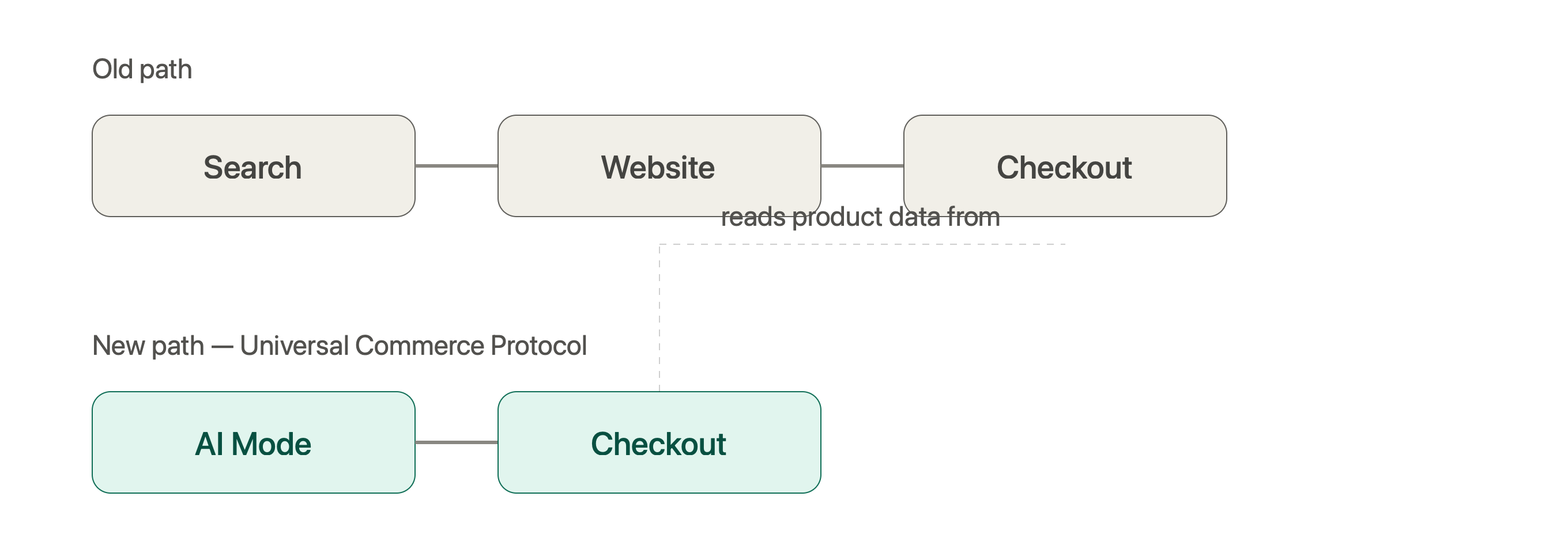
Here's the part fewer marketers have clocked yet: Google's Universal Commerce Protocol, the open standard it co-developed with Shopify, Target, Walmart, Etsy, and Wayfair, now lets a shopper complete checkout entirely inside Gemini or AI Mode, using Google Pay, without ever landing on the merchant's own website. The merchant stays the seller of record and still handles fulfillment, but the site itself becomes a backend data source rather than the place the transaction happens — a genuine reversal of 25 years of e-commerce logic. McKinsey projects agentic AI could influence $3 to $5 trillion in global retail commerce by 2030.
Shift 3: Brand Personality Is the New SEO
Here's the tension underneath one of the sharper digital marketing trends 2026 has surfaced: as more brands lean on AI to produce content, the content itself is starting to look the same. HubSpot's 2026 State of Marketing report found that 61% of marketers believe AI is driving marketing's biggest disruption in twenty years — and the disruption isn't capability, it's saturation. When everyone can generate a competent 800-word explainer in minutes, competent stops being a differentiator. What still cuts through, for a human reader and for a model choosing which source to cite, is a specific, ownable point of view.
Cosnet saw this dynamic play out before AI made it urgent. When Brivan Consultants, a financial consulting firm serving the global NRI community, moved from generic financial marketing to content built specifically around NRI-specific tax, compliance, and property concerns, visibility rose 45% and qualified inquiries grew 65%, alongside a 55% lift in social engagement. Specificity beat scale then. It's a sharper advantage now that AI models are also deciding which sources are trustworthy enough to cite — generic content has nothing distinctive for a model to point to.
What Connects All Three: Generative Engine Optimization
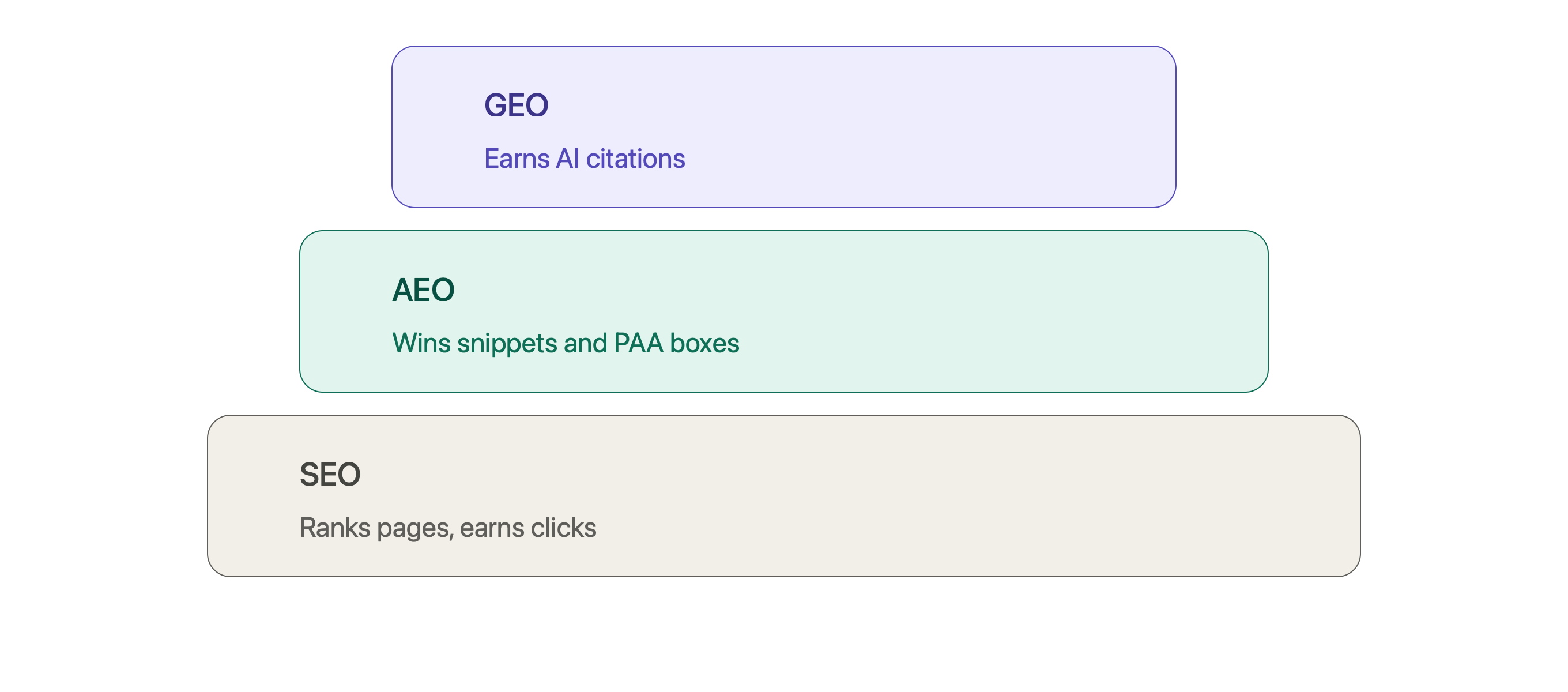
Ads inside AI answers, agents doing the shortlisting, and saturated generic content all point to the same underlying discipline behind this year's digital marketing trends 2026: Generative Engine Optimization, or GEO — structuring a brand's content and data so AI systems can find it, trust it, and cite it, not just so it ranks on a results page
Part of that discipline is genuinely mechanical: files like llms.txt tell AI crawlers what they're allowed to read and how to read it, the same way robots.txt has long directed traditional search crawlers. But the deeper part is editorial — writing the kind of clear, structured, opinionated content that both a person and a model can actually use. Brands that already think this way, publishing FAQ-structured content, clean specs, and a distinctive point of view, are the ones positioned to show up whether the query lands in Google, AI Mode, or a chat window.
A curious coincidence worth knowing: 61% shows up twice in the data behind this piece, for two different reasons. HubSpot's survey found 61% of marketers see AI content saturation as marketing's biggest disruption in 20 years — but separately, industry CTR studies have found AI Overviews can cut organic click-through rates by up to 61% on the queries where they appear. The two numbers aren't related, but they point at the same conclusion from opposite directions: fewer clicks are available, and more content is competing for them, which is exactly why being cited matters more than being clicked.
The Action Plan: What To Do This Quarter
Three moves matter more than a long checklist right now:
Audit your ad eligibility for AI surfaces. Check whether your existing exact/phrase match Search campaigns are already picking up AI Mode impressions — Google's test is quiet and account-level, so it's easy to miss without deliberately checking placement reports. If you run on Amazon Ads, ask your account team about ChatGPT Ads pilot access before eligibility widens past the current select group.
Make your core content machine-readable. Structured data, clear specs, and FAQ blocks aren't cosmetic — they're what lets an AI shopping agent actually compare you against a competitor in the first place. Pair this with a solid first-party data foundation and a genuine AI marketing transformation plan, so the personalization layer behind these agents has real signal to work from, instead of generic category assumptions.
Write one thing this quarter that only your brand could say. Not a rewritten roundup of what's already ranking — an actual position, backed by your own data, client results, or lived experience. That's the piece most likely to earn a citation instead of getting lost in the flood, and it's worth more than five more generic explainers published on the same week's news cycle.
FAQ
Q1: What does it mean for ads to appear inside Google AI Mode?
A1: It means sponsored content now sits inside the AI-generated response itself, not beside it. Google's Conversational Discovery ads and Highlighted Answers, both labeled "Sponsored," place Gemini-generated creative directly inside AI Mode's answers and recommendation lists, and as of September 2026, even standard exact/phrase match Search campaigns can qualify without needing AI Max or Performance Max.
Q2: What are AI shopping agents and how do they affect content strategy?
A2: AI shopping agents are AI systems, like those now integrated across Amazon and ChatGPT, that research, compare, and recommend products or services on a person's behalf. Because they parse structured data rather than skim marketing copy, brands need to make specs, pricing, and FAQs machine-readable, not just human-readable, to get included in that comparison.
Q3: How do you make content findable by AI agents rather than just human searchers?
A3: Structure content clearly with FAQs, defined specs, and clean schema markup, and use tools like llms.txt to signal to AI crawlers what they can access. Content that answers a specific question in a self-contained, quotable sentence is what AI systems most reliably extract and cite.
Q4: What is AI content saturation and how do brands cut through it?
A4: AI content saturation is the flood of similar, AI-generated content now filling every channel, which HubSpot's 2026 State of Marketing report links to 61% of marketers calling this marketing's biggest disruption in twenty years. Brands cut through it with specific, ownable points of view and real proof points — Cosnet's work with Brivan Consultants, for instance, lifted visibility 45% and inquiries 65% through audience-specific content rather than generic messaging.
Q5: How does GEO address all three of these marketing shifts?
A5: Generative Engine Optimization addresses all three because it treats AI systems as an audience: it prepares content to be found inside AI-mediated ad placements, to be parsed accurately by shopping agents, and to stand out as a citable, distinctive source in an AI-saturated content landscape. It's the connective discipline behind visibility in Google, AI Mode, and conversational platforms alike.
Q6: Is GEO different from SEO, or does it replace it?
A6: GEO doesn't replace SEO — it's a layer built on top of it. SEO still governs whether a page ranks and earns a click, while GEO governs whether that same content gets summarized, referenced, or cited inside an AI-generated answer, so strong technical and content SEO remains the foundation GEO depends on.
Q7: What is Google's "query fan-out" and why does it matter for content strategy?
A7: Query fan-out is the technique AI Mode uses to silently break one question into several related searches, run them in parallel, and merge the results into a single response. It matters because a brand needs to be citable across that whole cluster of sub-questions a topic can fan out into, not just optimized for the single headline query someone actually typed.
Q8: If I enable agentic checkout like Google's Universal Commerce Protocol, do I lose website traffic?
A8: Yes, in the sense that the transaction itself can now happen inside Google's AI surface using Google Pay, rather than on your own site. But the merchant remains the seller of record and still owns fulfillment and the customer relationship, so the trade-off is less about losing the sale and more about your website shifting from a storefront to a backend data source.
Q9: How is AEO different from GEO?
A9: Answer Engine Optimization (AEO) focuses on getting pulled into short, direct answer formats like featured snippets and "People Also Ask" boxes, while GEO focuses on getting cited or referenced inside longer AI-generated responses from tools like ChatGPT, Gemini, and Perplexity. The two overlap heavily in practice — clear, well-structured, factual content tends to win at both.
Q10: Will ads inside AI answers replace the need for organic SEO and GEO?
A10: No — if anything, they raise the stakes for organic visibility, since AI Overviews are already cutting organic click-through rates by as much as 61% on queries where they appear, which is a separate figure from the marketer-saturation stat above. Paid placements can buy a spot inside the AI answer, but the underlying structured, citable content is still what earns unpaid mentions in that same response, so organic GEO work and paid AI Mode strategy now reinforce each other rather than compete.
Digital marketing didn't wait for a strategy off-site to change — it changed inside a two-week news cycle. Of all the digital marketing trends 2026 has produced so far, this is the one worth building a plan around: the brands adapting fastest aren't the ones chasing every new ad format; they're the ones making their content genuinely useful to both the humans and the machines now reading it. Talk to our Experts to build a GEO-ready content and ad strategy before your competitors do.